
2 May 2026 · 7 min read
Understanding Roast Profiles: A Beginner's Guide
Charge temperature, first crack, development time — what each stage of a roast profile actually controls in the cup.
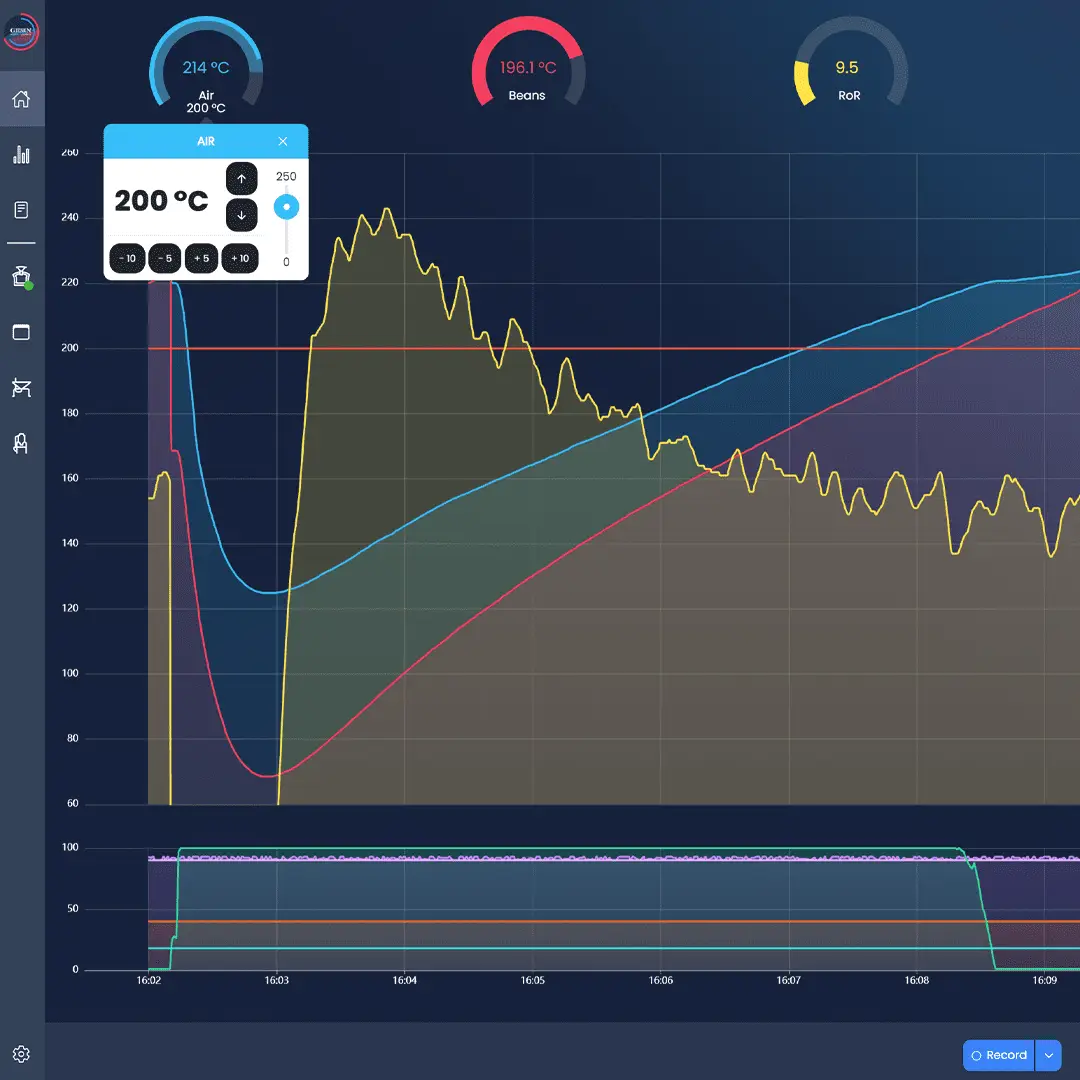
A roast profile is simply the record of bean temperature over time — but reading that curve well is what separates a repeatable roast from a lucky one.
Charge temperature
The temperature of the drum when beans go in sets the tone for the whole roast. Charge too hot and you risk scorching the bean surface before the centre catches up; charge too cool and you'll fight to build enough momentum before first crack.
First crack and development time
First crack marks the start of the development phase — the stretch of roasting where sugars caramelise and the flavour you'll actually taste gets built. Development time ratio (development time as a percentage of total roast time) is a useful number to track batch to batch, even before you start chasing specific flavour outcomes.
Most roasters don't need a new profile every week. They need to hit the same profile reliably, batch after batch.
Build your skills
Want hands-on profile training?
Our training days cover profile development on your own machine, with your own green coffee.
Keep reading
Related articles
 Roasting Techniques
Water Quality and Its Impact on Roast Consistency
It's not just for brewing — mineral content in your quench and cooling systems can quietly shift your roast results.
5 April 2026 · 5 min read
 Buying Guides
How to Choose the Right Roaster Capacity for Your Business
Batch size looks simple on a spec sheet until it meets your actual weekly volume. Here's how to size a roaster against real demand, not projected demand.
18 May 2026 · 6 min read